Main Content
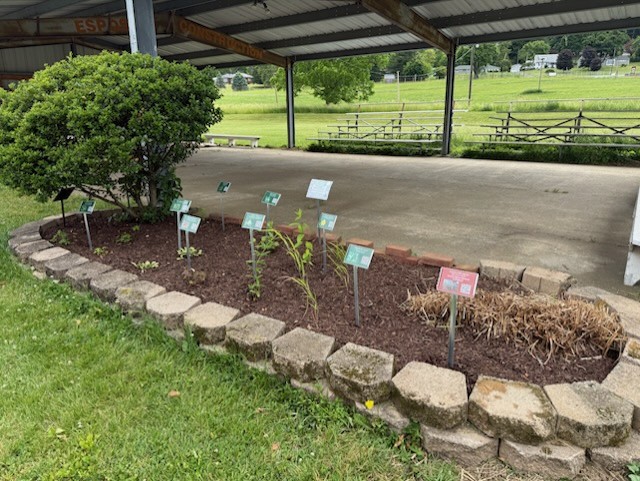
Welcome to the website for the Rutgers Cooperative Extension native plant garden.
The garden is located outside of the 4-H Pavillion on the Warren County Fairgrounds. Funding for this garden was made possible by the New Jersey Native Plant Society.


Why plant native plants?
A native plant is defined as one that has evolved over thousands of years in a specific geographic region, alongside local flora and fauna, without human intervention. These plants thrive naturally in their native habitats, establishing intricate relationships with local wildlife. Their ability to adapt to environmental changes has led to a resilience during significant shifts in their surroundings.
Native plants are crucial for providing essential food sources like nectar, pollen, and seeds, while also providing crucial habitats for a diverse range of wildlife species that non-native plants fail to support. For instance, many insects, including butterflies, depend on these native plants not only for nourishment but also for breeding. The survival of monarch butterflies, in particular, hinges on native milkweed, as they lay their eggs exclusively on this plant, making it indispensable for the health and continuation of their caterpillars.
Once established, native plants require minimal maintenance due to their adaptation to local weather patterns, seasons, soils, and pests. They thrive with little need for fertilizers or pesticides, are efficient in water usage, and play a crucial role in reducing soil erosion.
Many plants found in nurseries are non-native species introduced from other countries. These species can become invasive, outcompeting native plants and disrupting our local ecosystems.
The introduction of these non-native plants into our landscapes has significantly contributed to the decline of pollinators and other wildlife, primarily due to habitat destruction and a lack of accessible food sources. Many insects and birds have not evolved rapidly enough to coexist with these new species, which poses a serious threat to biodiversity.
The article “Provide Food Sources” from the Center for Pollinator Research at Penn State College of Agricultural Sciences highlights that native pollinators are four times more likely to be found on native plant species than on non-native ones. Additionally, it states that around 90% of native insects can only consume the native plants with which they have co-evolved.
If you are considering planting native species in your landscape, fall is generally regarded as the ideal season for planting native trees, shrubs, grasses, vines, and perennials. For more information, you can refer to the Rutgers Fact Sheet titled “Incorporating Native Plants in Your Residential Landscape” available at this link: https://njaes.rutgers.edu/FS1140/. Happy planting!
Here are the native plants you will find in our garden:
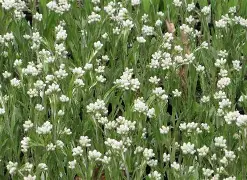
Antennaria plantaginifolia ‘Plantainleaf Pussytoes’
Family: Aster / Asteraceae
Height: 10 inches
Bloom Time: April – May
Bloom Color: White
Sun: Full sun to partial shade
Water: dry soil, drought-tolerant once established.
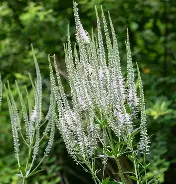
Veronicastrum virginicum ‘Culver’s Root’
Family: Plantain / Plantaginaceae
Height: 2 to 6 feet
Bloom Time: June – September
Bloom Color: typically white, but may also be lavender or blue in color
Sun: Full sun, partial shade
Water: Damp, not soggy soil

Anemone canadensis ‘Canada Anemone’
Family: Buttercup / Ranunculaceae
Height: 1 to 2 feet
Bloom Time: April to June
Bloom Color: White
Sun: Full sun to part shade
Water: Dry to moist soil

Aquilegia canadensis ‘Wild Columbine’
Family: Buttercup / Ranunculaceae
Height: 2 to 3 feet
Bloom Time: May to June
Bloom Color: Red, yellow
Sun: Part shade
Water: Dry to moist soil, drought-tolerant once established
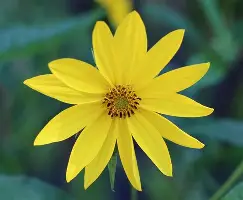
Helianthus decapetalus ‘Thinleaf Sunflower’
Family: Aster / Asteraceae
Height: 3 to 6 feet
Bloom Time: June to November
Bloom Color: Yellow
Sun: Full sun to partial shade
Water: Moist soil
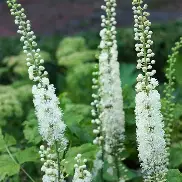
Actaea racemosa ‘Black Cohosh’
Family: Buttercup / Ranunculaceae
Height: 4 to 6 feet
Bloom Time: May to August
Bloom Color: White
Sun: Partial to full shade
Water: Moist soil
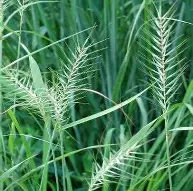
Elymus hystrix ‘Bottlebrush Grass’
Family: Grass / Poaceae
Height: 2 to 3 feet
Bloom Time: June to August
Bloom Color: Green
Sun: Partial sun to shade
Water: Dry to moist soil, drought-tolerant once established
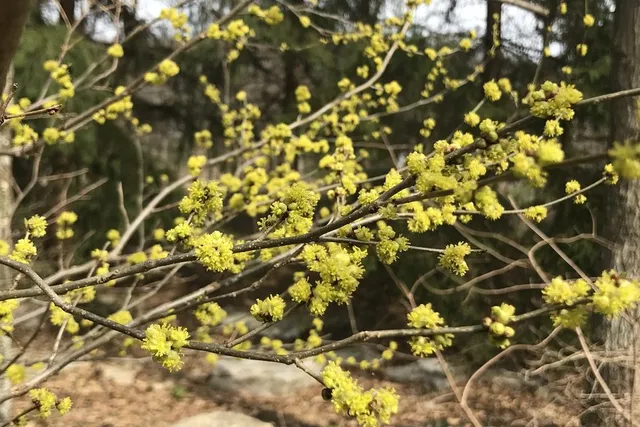
Lindera benzoin ‘Spicebush’
Family: Laurel / Laurelaceae
Height: 4 to 10 feet
Bloom Time: March
Bloom Color: Yellow
Sun: Full sun to partial shade
Water: Average to moist soil

Ilex opaca ‘American Holly’
Family: Holly / Aquifoliaceae
Height: 15 to 30 feet
Bloom Time: March to June
Bloom Color: White, green
Sun: Full sun to full shade
Water: Moist soil
American holly can grow as a shrub or tree and it has spiny leaves that remain green year-round. The newer leaves are glossy and older leaves more matte.

Parthenocissus quinquefolia ‘Virginia Creeper’
Family: Grape / Vitaceae
Height: 3 to 40 feet
Bloom Time: May to June
Bloom Color: Green
Sun: Full sun to full shade
Water: Moist soil

Miscanthus sinensis Chinese Silvergrass– Invasive Species Removal in Progress!
Family: Poaceae
Height: 10-12 feet
Bloom Time: Late summer/early fall
Bloom Color: Beige
Sun: Full sun to part shade
Water: Dry/well drained
Silver grass is still sold in garden nurseries, and the aggressive spread outcompetes native plants in the ecosystem. It poses a fire risk, as all parts of the plant are extremely flammable.
Silver grass should not be planted. Flower stalks should be cut before setting seed; stalks and rhizomes should not be composted but bagged and thrown in the trash. Non-selective herbicides, such as glyphosate and imazapyr can be used, according to label instructions. Repeated applications to cut rhizome masses will be necessary over several seasons.